
Coastal Restoration Trust of New Zealand
Donate Facebook
  • Home
  • About us
    • Trustees
  • Dune restoration
    • How dunes work
    • Plants & animals
    • Restoration planning
  • Coast Care groups
    • Coast Care groups map
    • Success stories
    • Join the Coastal Restoration Trust
  • Projects
    • Saving Our Coastal Cultural Heritage: A New National Project Begins
    • Videos and workshops
    • Tūhaitara coastal sequence
    • Coastal Database 2015 - ongoing
    • Coastal buffers 2019 - 2021
    • Koi carp 2016-2020
    • Outreach 2016-2019
    • Restoration monitoring 2016-2018
    • Restoration of difficult sand dune sites 2015-2018
    • Backdune restoration 2011-2014
  • Resources
    • CRT resources
    • External resources
  • News
    • Annual conference
    • Online events
    • Newsletters
    • Media articles
  • Awards
    • Pīngao & Toheroa Trophy
    • Post-graduate Scholarship
    • Coastal Restoration Award
    • Best Coastal Community Group Award 2009-2018
    • Best Coastal Restoration Project Award 2009-2018
  • Partners
    • Join the Coastal Restoration Trust
    • Research Partners
  • Contact
  1. Home
  2. News
  3. News article

News article

Restored dunes supporting more pipi/tuatua

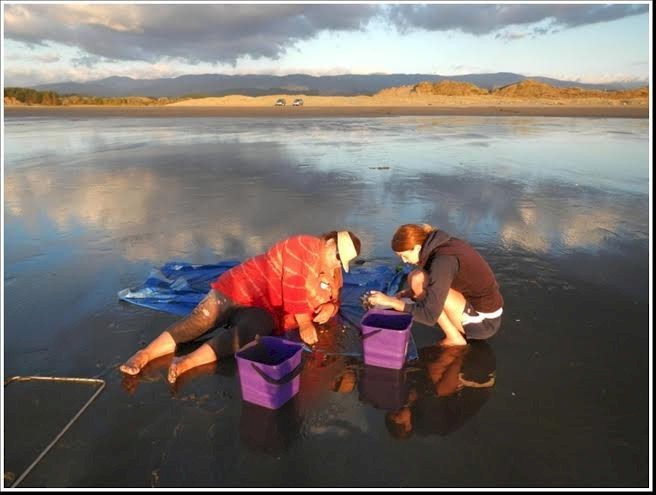
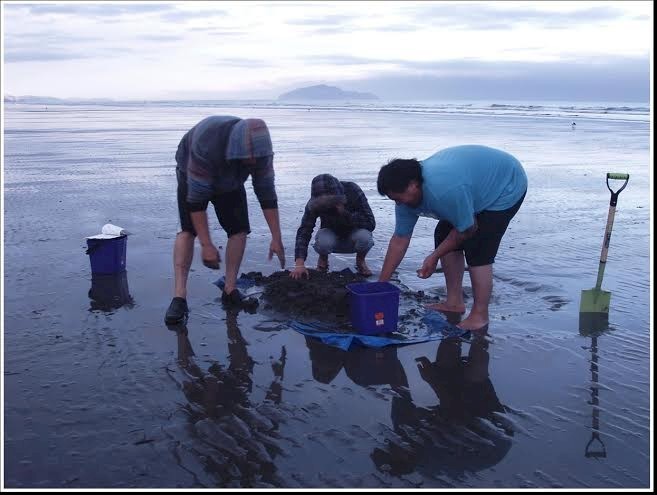
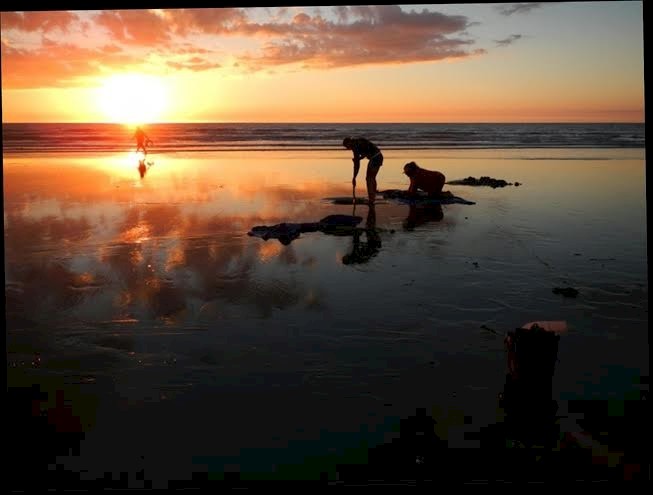
A joint project between tangata whenua, Māori researchers and ecologists, has found that toheroa, which was once abundant on the Horowhenua coastline, and still prized by tangata whenua, have been reduced to very low numbers between Hōkio and Ōtaki.
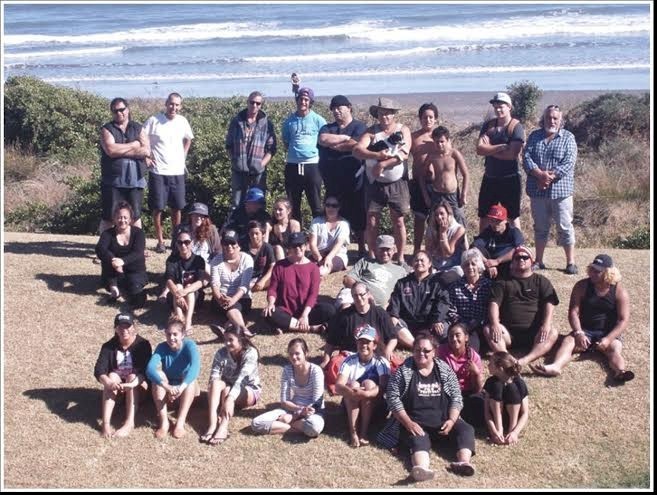
An associated study assessing Escherichia coli (a bacteria that indicates faecal contamination) clearly indicated that the shellfish that remain are regularly contaminated with faecal material and thus unsuitable or only marginally suitable for human consumption, in terms of Ministry of Health guidelines. This contamination is of great concern for cultural and health reasons. Land cover data showed a dominance of particular land covers in the adjacent catchments, which can contribute to this contamination.

The study was a part of the Manaaki Taha Moana project through Taiao Raukawa with Iwi and Hapū, and in association with Cawthron Institute and Massey University. The research is assisting tangata whenua in their work with councils, scientists and other local interests to address habitat degradation and consider re-seeding of taonga species.
Coastal Restoration Trust Trustee, Tim Park comments that “It’s very interesting that this research found the largest tuatua populations at Waitohu. It’s a long way up the coast from Hōkio to Ōtaki! It’s intriguing that five to six times more tuatua were found at the South Waitohu sample site than most other places they sampled in this massive study area.”

“Its great that the award winning care group Waitohu StreamCare has been actively restoring the dunes in this area for some time with the longstanding and ongoing support of Kapiti Coast District Council and Greater Wellington Regional Council. As well as the revegetated dune areas, the area is also home to some of the most intact natural foredunes in the Foxton Ecological District and are dominated by the sand-binder, Spinifex.” Tim said.
“I’d like to think that the comparatively high number of tuatua found at Waitohu has something to do with the naturalness of the ecosystem. Heathly beach systems are usually able to support more native species and are also more resilient to natural and human impacts. There is some evidence from Northland that the toheroa lifecycle depends on native sand binders. I wonder if this is also true for other shellfish species”.

Dr Huhana Smith from Taiao Raukawa says “A customary Māori worldview would understand and respect the natural interrelationships between coastal native plants and shellfish. However, we believe that intensive agriculture, exotic forests and extensive wetland drainage within the case study catchment areas has impacted on our ability to support and maintain those relationships. This land use change is considered one factor amongst others that has led to the overall decline of shellfish populations, which we consider are taonga.”
The faecal contamination and land use changes for kaimoana reports will be available soon at http://www.mtm.ac.nz/ or for more information contact Dr Huhana Smith [Enable JavaScript to view protected content] , Emma Newcombe [Enable JavaScript to view protected content] or Craig Allen [Enable JavaScript to view protected content]

Posted: 18 September 2014 in the Flora & fauna category

Prev article
All articles
Next article
  • News
    • Annual conference
      • Ūawa Tolaga Bay 2025
      • Kāwhia 2024
      • Auckland 2023
      • Whanganui 2021
      • Southland 2020
      • Warkworth 2019
      • Petone 2018
      • Christchurch 2017
      • Gisborne 2016
      • Whitianga 2015
      • New Plymouth 2014
      • Nelson 2013
      • Pre-2013 conferences
    • Online events
    • Newsletters
    • Media articles

Subscribe to our newsletter

© 2026 Coastal Restoration Trust of New Zealand • Website by RS

Donate
  • Home
  • About us
    • Trustees
  • Dune restoration
    • How dunes work
    • Plants & animals
      • Foredune species
      • Backdune species
      • Lizards
    • Restoration planning
  • Coast Care groups
    • Coast Care groups map
    • Success stories
    • Join the Coastal Restoration Trust
  • Projects
    • Saving Our Coastal Cultural Heritage: A New National Project Begins
    • Videos and workshops
    • Tūhaitara coastal sequence
    • Coastal Database 2015 - ongoing
    • Coastal buffers 2019 - 2021
    • Koi carp 2016-2020
    • Outreach 2016-2019
    • Restoration monitoring 2016-2018
    • Restoration of difficult sand dune sites 2015-2018
    • Backdune restoration 2011-2014
  • Resources
    • CRT resources
      • Our Coast video series
      • Regional coastal restoration videos
      • Planting Calculator
      • Coastal Restoration Handbook
      • Coastal Reference Database
      • Coastal Monitoring Database
      • Photo gallery
      • Signage templates and examples
      • Frequently asked questions (FAQ)
    • External resources
      • School Resources
      • Research bulletins & reports
      • Links
      • Podcasts & DVD clips
  • News
    • Annual conference
      • Ūawa Tolaga Bay 2025
      • Kāwhia 2024
      • Auckland 2023
      • Whanganui 2021
      • Southland 2020
      • Warkworth 2019
      • Petone 2018
      • Christchurch 2017
      • Gisborne 2016
      • Whitianga 2015
      • New Plymouth 2014
      • Nelson 2013
      • Pre-2013 conferences
    • Online events
    • Newsletters
    • Media articles
  • Awards
    • Pīngao & Toheroa Trophy
    • Post-graduate Scholarship
    • Coastal Restoration Award
    • Best Coastal Community Group Award 2009-2018
    • Best Coastal Restoration Project Award 2009-2018
  • Partners
    • Join the Coastal Restoration Trust
    • Research Partners
  • Contact
  • Facebook
  • Donate
  • Search...